Rail Freight China to USA 2026: Amazon Guide
As an Amazon FBA seller in January 2026, tariffs remain a factor (stable ~20–30% on most categories after 2025 adjustments), port operations are semi-normal post-holidays, and inland trucking costs still bite for Midwest/East Coast warehouses. Pure ocean to the West Coast is affordable but adds slow trucking legs that inflate total spend.
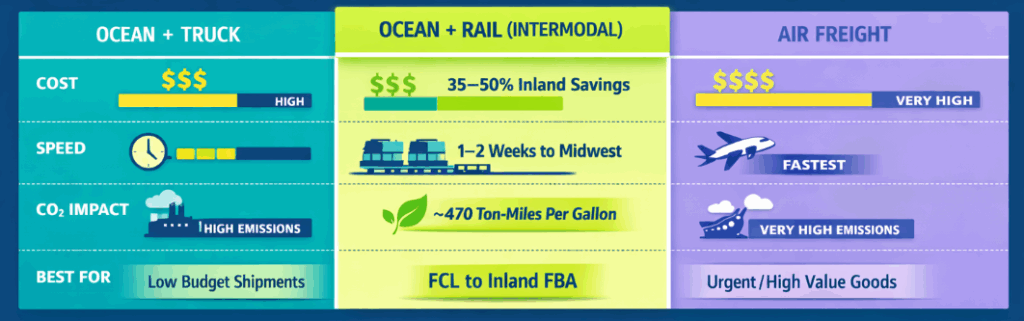
The smart play? Intermodal rail freight (ocean + rail). Ocean to West Coast ports, then rail via BNSF or Union Pacific to inland hubs near FBA centers like Chicago, Dallas, or Atlanta. This cuts inland costs by 35–50% vs. all-truck for long hauls, delivers faster to non-coastal spots, and provides reliability amid softer early-2026 volumes.
This guide covers 2026 realities: exact costs/times from current data, step-by-step process, advantages for FBA scaling, and how Unicargo makes it seamless.
For a complete breakdown of all shipping options from China to Amazon FBA in 2026 — including ocean, air, rail, and cost comparisons – see our full China to Amazon FBA Shipping 2026 guide.
Key Insights for Scaling in 2026
Navigating US-China Tariffs and Trade Shifts
Stable tariffs favor cost-efficient modes like rail for China volume.
Emerging Trends in Intermodal Logistics
Soft early volumes boost capacity; rail remains key for imports.
How Unicargo Optimizes for Amazon Sellers
End-to-end: pickup, customs, rail/FBA coordination. Real client: Shanghai → Chicago electronics saved ~$2,000/container inland (40% reduction). Request your free Unicargo intermodal quote for 2026 shipments – personalized rates/routes/savings in 24 hours.
What Is Rail Freight from China to the USA?
Intermodal combines ocean transport across the Pacific with U.S. domestic rail – no direct train exists due to the ocean.
The Reality of Intermodal Shipping (Sea + Rail)
Container sails from China (e.g., Shanghai/Ningbo) to the West Coast (LA/Long Beach, Oakland, Seattle). Post-customs, short dray to rail terminal, then double-stack train to inland ramp. Final short truck to FBA.
Why There’s No Direct Rail Link Across the Pacific
Geography: Pacific Ocean requires a sea leg. (Direct rail is limited to China-Europe routes.)
How It Fits Into Your Supply Chain
Ideal for FCL mid/high-volume FBA shipments targeting inland warehouses. Balances the ocean’s low cost with the rail’s inland efficiency, great when inventory splits across regions.
If you’re comparing rail vs. ocean vs. air for your specific product category, review our detailed Amazon FBA shipping from China in 2026 breakdown before choosing your mode.
Key Advantages for Amazon FBA Sellers
Massive Cost Savings on Inland Transport
Rail hauls one ton ~470 miles per gallon (4x truck efficiency), yielding 35–50% inland savings. With ocean stabilizing and rail soft early 2026, total door-to-door stays competitive.
Faster Delivery to Midwest/East Coast Warehouses
Often 1–2 weeks quicker than ocean + full truck for inland, reducing stockouts.
Lower Carbon Footprint for Eco-Conscious Brands
Rail emits up to 75% less CO2 per ton-mile, boosting sustainability claims.
Reliability Amid Port Congestion and Tariffs
Early 2026 rail volumes down ~3–5% y/y, improving capacity. Tariffs push cost optimization – rail absorbs inland pressure.
Step-by-Step: How China to USA Rail Freight Works
Pickup and Ocean Leg from Chinese Ports
Supplier → export customs → ocean to West Coast (14–20 days Shanghai → LA/LB).
US Port Arrival, Customs, and Drayage
Offload → customs (1–3 days; file ISF early) → dray to rail terminal.
Rail Transit to Inland Hubs
Train via major corridors (fixed schedules).
Final Mile Delivery to FBA Centers
Ramp unload → short truck to warehouse, timed for FBA appointments.
2026 Costs: Breakdown and Projections (January Data)
Rates reflect post-holiday softness; fuel surcharges ~15–25%; exclude duties/tariffs.
Ocean Freight Rates (China to US West Coast)
FCL 40′ HC: $2,300–$3,200 (LA/LB typical; some quotes $2,000–$2,800 promotional).
Rail Freight Add-Ons (West Coast to Inland)
LA → Chicago: $2,500–$4,500 (standard; premium faster higher).
LA → Dallas: $2,000–$3,800.
LA → Atlanta: $3,000–$5,000.
Total Door-to-Door Estimates
Shanghai → Chicago (40′ container): $8,000–$13,000 (ocean + rail + dray/fees). Savings: 35–50% inland vs. trucking.
Factors Driving 2026 Rate Changes (Tariffs, Fuel, Demand)
Tariffs stable (~20–30% most FBA goods); early-year softness keeps rail competitive. Potential rebound pre-Lunar New Year.
Transit Times: What to Expect in 2026
End-to-End Timelines by Route
Shanghai → Chicago: 20–33 days door-to-door.
Shanghai → Dallas: 21–34 days.
Shanghai → Atlanta: 22–35 days.
Delays to Watch For (Congestion, Weather)
Port/customs 2–5+ days; winter weather/rail 1–5 days.
Tips to Speed Up Your Shipments
Early ISF, premium rail, Unicargo scheduling.
Top Routes, Ports, and Carriers
Key West Coast Entry Points (LA, Seattle, Oakland)
LA/Long Beach: Highest volume/rail access (congestion risk). Oakland/Seattle: Less crowded.
Major US Rail Corridors (Trans-Pacific, Southern Transcon)
Transcon (LA → Chicago); Southern (LA → Texas/Atlanta).
Leading Carriers (Union Pacific, BNSF)
BNSF/UP dominate; premium services are faster.
FAQ
Is rail freight from China to USA cheaper than all-truck inland?
Yes—35–50% savings for >750 miles via rail efficiency.
How long does intermodal shipping from China to Chicago take?
20–33 days door-to-door; often faster inland than ocean + truck.
Can I use rail for LCL shipments to Amazon FBA?
Possible, but FCL maximizes benefits; LCL typically trucks inland.
What documents do I need for China-USA rail freight?
Invoice, packing list, B/L, ISF, customs docs – Unicargo handles.
How do 2026 tariffs impact rail costs?
Tariffs on goods value (not freight directly) – rail offsets inland costs for better landed margins.
Ready to slash inland costs and accelerate FBA replenishment? Get your free Unicargo quote today (or click below)