De Minimis Ended: 2026 Amazon FBA Tariffs Guide | What You Need to Do Now After the Exemption Ended
TL;DR
The de minimis exemption ($800 duty-free threshold) ended for China in May 2025 and globally in August 2025 – no more duty-free small parcels. Following the November 2025 US-China truce, Section 301 tariffs are stable (typically 20–30% total for most FBA goods) with no major hikes expected in 2026. Costs rose 15–40% for many sellers, but consolidation, optimized forwarding, and strategic sourcing can cut that back significantly. Unicargo clients are saving 15–20%+ on duties/freight post-changes.
As an Amazon FBA seller or U.S. Importer sourcing from China, you’ve likely felt the sting of rising landed costs this year. The biggest game-changer? The de minimis exemption – that handy rule allowing shipments under $800 to enter the U.S. duty-free – ended for Chinese-origin goods back on May 2, 2025, and was fully suspended globally on August 29, 2025. If the biggest question on your mind is “who can actually handle post–de minimis FBA shipping correctly,” here’s a practical guide to choosing the right partner: best freight forwarder for Amazon FBA in 2026.
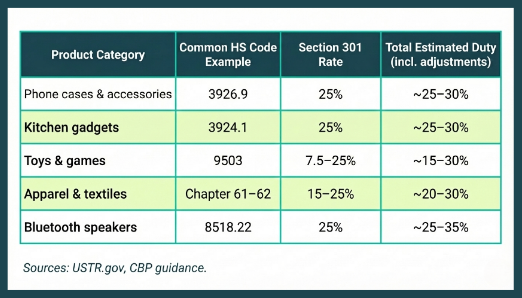
No more splitting orders into small parcels to dodge duties. Combined with ongoing Section 301 tariffs (typically 7.5–25% on most consumer goods) and other trade measures, this has driven up costs significantly for many sellers.
But there’s good news amid the stability: Following the November 2025 US-China trade truce, broader reciprocal tariffs remain suspended through November 2026, and fentanyl-related add-ons dropped by 10 points effective November 10, 2025. Overall rates on Chinese imports are holding at more manageable levels (around 20–30% total for many categories) heading into 2026 – no major escalations expected soon.
In this guide, we’ll break down the current (December 2025) landscape, show real cost impacts with examples, and share proven strategies to minimize duties and keep your margins healthy.
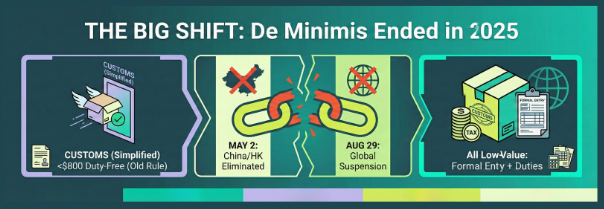
The Big Shift: De Minimis Exemption Ended in 2025 – No More Duty-Free Low-Value Shipments from China
For years, the Section 321 de minimis rule was a lifeline for Amazon FBA sellers and importers. Shipments valued at $800 or less per person per day cleared customs with minimal paperwork and zero duties – perfect for air/express couriers or splitting ocean containers.
That ended abruptly:
- May 2, 2025: De minimis eliminated specifically for goods from China and Hong Kong.
- August 29, 2025: Suspension extended globally—all low-value shipments now require formal entry and pay applicable duties.
Result? Even a $300 parcel of phone cases now faces full Section 301 tariffs, plus potential fees. No loopholes left.
Current US-China Tariff Status (December 2025 Update): Stability After the November Truce
The November 2025 agreement between President Trump and President Xi brought much-needed calm:
- Heightened reciprocal tariffs remain suspended until November 10, 2026.
- Fentanyl-related surcharges reduced by 10 percentage points (effective Nov 10, 2025).
- Certain Section 301 exclusions extended to November 2026.
For most Amazon FBA categories (electronics accessories, home goods, toys, apparel), effective rates are now around 20–30% total (base + Section 301), down from earlier 2025 peaks of 145% in some scenarios.
No new broad hikes are on the horizon for 2026, giving sellers breathing room to adapt.
How Section 301 Tariffs Actually Hit Common Amazon FBA Products in 2026
Section 301 duties vary by HS code, but here’s a quick table of rates for popular China-sourced FBA niches (as of Dec 2025):
Real Cost Impact: Before vs. After De Minimis for Your Inventory
Let’s make this concrete with a typical example: Wireless earbuds (high-volume FBA product from China).
- Pre-2025 (with de minimis): 500 units split into $600 parcels → ~$0 duties + low express freight.
- Post-de minimis (2025–2026): Full consolidation required → Section 301 at 25% + formal entry fees.
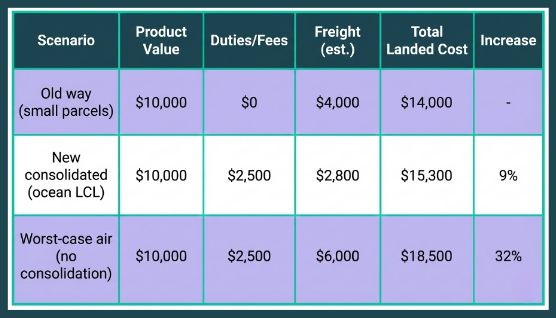
Want to sanity-check the freight assumptions in the table? See the current ocean freight rates China to USA and how they’re trending.
7 Practical Strategies to Minimize Duties and Freight Costs in 2026
- Consolidate shipments – Switch to LCL/FCL ocean freight for bulk duties paid once.
- Optimize HS codes – Work with experts to classify accurately (and legally) for lower rates.
- Explore exclusions – Check USTR for extended Section 301 relief on your products.
- Diversify sourcing – Shift portions to Vietnam/India (lower or zero tariffs).
- Use DDP terms wisely – Let forwarders handle duties upfront for predictability.
- Stock up strategically – Import larger batches during stable periods.
- Partner with a specialized forwarder – For compliance, consolidation, and cost savings.
If choosing the right forwarder is the lever you want to pull first, here’s a practical breakdown of what to look for (and what to avoid): Best Freight Forwarder for Amazon FBA in 2026.
Why Switching to a Specialized Freight Forwarder Matters Now
Generic forwarders often miss FBA-specific nuances, like prep requirements, timing, and duty optimization. A partner experienced in post-de minimis workflows can reroute, consolidate, and apply exclusions to slash costs. Not all “FBA forwarders” are built the same – this guide explains the exact criteria sellers should use to pick a partner in 2026: best freight forwarder for Amazon FBA.
Unicargo Case Study: How We Saved an FBA Seller Thousands Post-De Minimis
Take Jake, an Amazon seller scaling a private-label kitchen gadget line (silicone baking mats and utensils—a super common FBA category from China).
Pre-2025, Jake relied on air/express parcels under $800 to avoid duties—fast replenishment, zero tariffs.
After the May 2025 de minimis end, his costs exploded: 25% Section 301 duties on every shipment, plus formal entry delays threatening stockouts.
He switched to Unicargo mid-year. We audited his HS codes, consolidated into LCL ocean containers, handled full DDP clearance, and optimized routing to avoid peak fees.
Results:
- Duties/freight reduced by 18% overall.
- Landed cost per unit dropped from $4.20 to $3.45.
- Annual savings: $52,000 on his $300k import volume.
- No more customs holds—inventory arrived reliably for Prime eligibility.
Jake maintained 35%+ margins into 2026, even with stable tariffs.
Your 2026 Action Plan + Free Tariff Checklist
- Audit your top ASINs for current duty exposure.
- Calculate post-truce landed costs.
- Get a free quote from a specialized forwarder (like us at Unicargo).
- Download our gated 2026 Tariff Checklist for FBA Sellers for HS code tips, calculators, and more.
The de minimis era is over, but with the current trade stability and smart strategies, 2026 can still be profitable. Ready to optimize your freight and duties?
Get a Free Quote Today and start saving!
FAQ: De Minimis & Tariffs for Amazon FBA Sellers & Importers (2026)
1. Is the de minimis exemption still available for shipments from China?
No. Ended May 2, 2025, for China/Hong Kong and globally suspended August 29, 2025.
2. What are current Section 301 tariff rates on Chinese goods for FBA?
Typically 7.5–25%, totaling ~20–30% for most consumer categories after November 2025 truce adjustments.
3. Will tariffs increase further in 2026?
No major hikes expected; reciprocal tariffs suspended until November 2026 per US-China agreement.
4. How much did costs rise after de minimis ended?
15–40% for many sellers using small parcels; consolidation reduces it to ~9–15%.
5. Can I still avoid duties by splitting shipments?
No. All low-value shipments now require formal entry and pay duties.
6. What’s the best way to reduce duties in 2026?
Consolidate into ocean LCL/FCL, optimize HS codes, and use a specialized DDP forwarder.
7. Are there any Section 301 exclusions left?
Yes, many extended to November 2026; check USTR.gov for your HS codes.
8. Should I diversify sourcing away from China?
Recommended for portions-Vietnam/India often have lower or zero tariffs.
9. Does DDP shipping help with tariffs now?
Yes, the forwarder pays duties upfront, providing predictability and often better rates.
10. How can Unicargo help with post-de minimis challenges?
We consolidate, handle compliance, and optimize routes – clients save 15–20%+ on duties/freight.